

Last Updated: 22 October 2026
Quick Summary
For light surface rust on small steel springs, white vinegar can be an effective and accessible cleaning method. Soak the spring for around 30 minutes to 2 hours, checking it regularly, then gently remove loosened rust with a soft-bristled brush. Rinse thoroughly, dry immediately and apply suitable protection afterwards. For hardened, high-strength or specialist precision springs, first check that acid cleaning is suitable for the material.
Table of Contents
- Why Rust Damages Delicate Springs and When to Act
- How to Clean Rusty Springs: The Step-by-Step Process
- Vinegar Rust Removal for Small Metal Parts
- Cleaning Rust From Watch Hairsprings and Precision Components
- How to Prevent Rust on Springs After Cleaning
- Common Mistakes That Damage Springs During Rust Removal
- Frequently Asked Questions
Why Rust Damages Delicate Springs and When to Act
Rust on delicate springs is a real problem. It weakens the metal and makes the spring lose its tension. Left unchecked, rust will eventually cause complete failure.
Delicate springs are found in watches, clocks, precision instruments, and cabinet hardware. They're thin. They're precise. They corrode fast once moisture gets in.
The good news: rust removal is possible if you act early. The bad news: one wrong move can snap the spring or damage the fine details permanently. This guide will show you exactly how to remove rust from delicate springs safely.
At DeFrixo, we work with installers and craftspeople who handle precision components daily. We know that the difference between a successful repair and a ruined part often comes down to technique, not luck.
How to Clean Rusty Springs: The Step-by-Step Process
Removing rust from delicate springs requires patience and the right approach. Rush the job and you'll damage the spring. Take your time and you'll restore function without harm.
Assess the rust severity first
Look at your spring carefully before you start cleaning. Is the rust surface-level, or has it eaten into the metal?
Light surface rust appears as a thin orange or brown layer. You can see the metal shape underneath. This is the easiest type to remove.
Heavy rust looks thick and crusty. It may have pitted the surface or created deep corrosion. Heavily rusted springs are harder to save.
Hairline cracks or deep pitting mean the spring has lost structural integrity. Cleaning won't restore strength. These springs may need replacement instead.
Run your finger gently over the rusted area (wear gloves). If it feels rough and crumbly, it's surface rust. If it feels smooth or has visible holes, the corrosion has gone deep.
Prepare your workspace and materials
Set up a clean, dry workspace before you touch the spring. Moisture is your enemy. You'll need:
- Small glass or ceramic container (never metal)
- White vinegar (standard household type)
- Soft-bristled brush (old toothbrush works well)
- Lint-free cloth
- Distilled water for rinsing
- Dry towel
- Small container of light machine oil
Work in a warm room if possible. Cold temperatures slow the rust removal process. Aim for at least 15°C.
Keep your workspace organised. Have the cloth and towel ready before you start. You'll need to dry the spring immediately after cleaning.
Remove surface rust safely
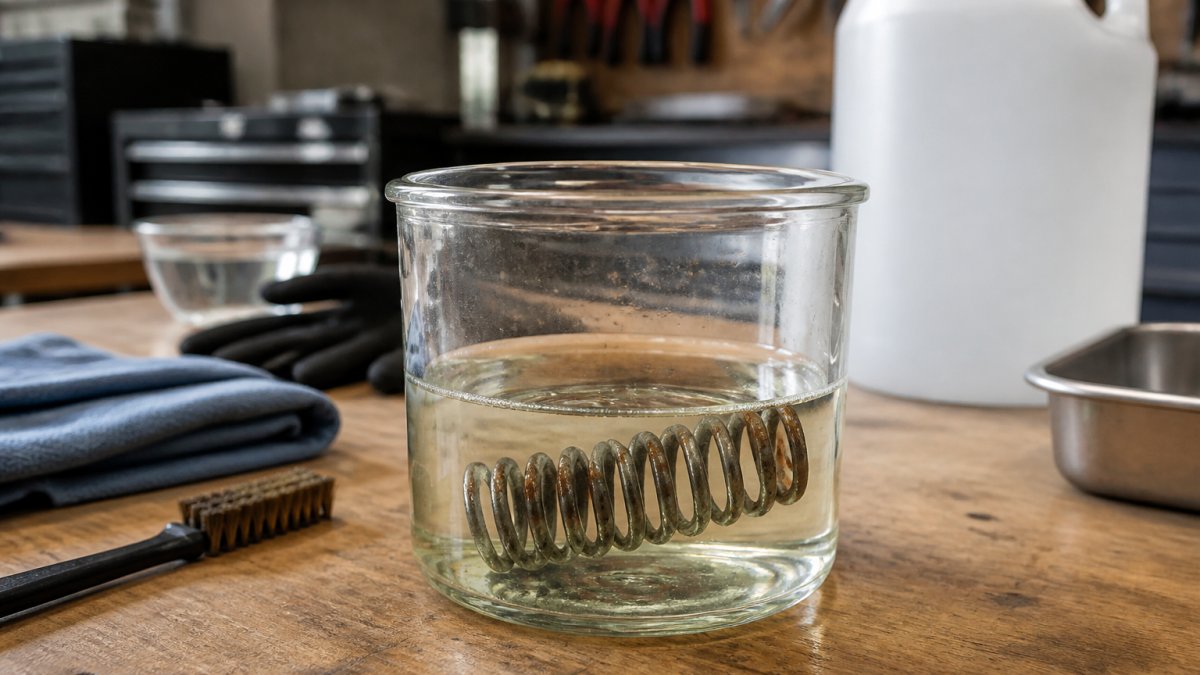
Place your rusted spring in the glass container. Pour white vinegar over it until the spring is fully submerged. The vinegar will begin breaking down the rust immediately.
For light surface rust, leave it to soak for 30 minutes to 2 hours. Check every 30 minutes. Do not leave it longer than 4 hours, as vinegar can attack the base metal if the spring soaks too long.
After soaking, remove the spring carefully. Use the soft brush to gently scrub away the loose rust. Work in one direction. Don't scrub back and forth aggressively.
Rinse the spring under running distilled water. Pat it dry with the lint-free cloth immediately. Do not air-dry. Moisture left on the surface will start new rust within hours.
For stubborn rust that didn't come off with the brush, repeat the soak and scrub cycle once more. Two cycles are usually enough. Three cycles risks damaging the spring.
Vinegar Rust Removal for Small Metal Parts
Vinegar works because it's acidic enough to dissolve rust but gentle enough not to harm the base metal. It's the standard choice for delicate work.
Why vinegar works on light rust
Vinegar contains acetic acid. This acid reacts with iron oxide (rust) and converts it into a form that washes away easily. The process is slow and controlled, which is exactly what you want for precision parts.
Short vinegar soaks are commonly used to remove surface rust from small steel parts, but extra care is needed with hardened, tempered or high-strength springs. Keep exposure as short as necessary, monitor the spring regularly and avoid prolonged soaking. If the spring material or treatment is unknown, check the manufacturer's guidance before using an acidic rust remover.
Other rust removers work faster but are harsher. Phosphoric acid products (like naval jelly) are stronger but can leave pitting. Electrolysis works well but requires special equipment. For delicate springs, vinegar is the right balance.
The vinegar soak method explained
The method is straightforward. Submerge the spring fully. Let chemistry do the work. Check progress every 30 minutes.
You'll see the vinegar change colour as it dissolves the rust. It may turn orange or brown. This is normal. The rust is coming off.
After soaking, gently brush away the loosened rust. Rinse immediately with distilled water. Dry completely with a cloth.
If rust remains, repeat the soak. Most light rust comes off in one cycle. Stubborn rust may need two. Rarely do you need more than two cycles.
Don't soak springs in vinegar overnight. The acetic acid will eventually attack the base metal. Stick to 2-4 hours maximum per soak.
Cleaning Rust From Watch Hairsprings and Precision Components
Watch hairsprings are extremely delicate. They're thinner than human hair. One careless move will snap them. These require specialist handling.
Why hairsprings require specialist handling
A watch hairspring is a coiled strip of metal. It regulates the oscillation of the balance wheel. If it bends, breaks, or loses tension, the watch won't keep time.
Hairsprings are also very small. They're difficult to see clearly. They're easy to damage without realising it.
The rust removal process is the same as for other springs, but the margins for error are much smaller. You must work slowly and carefully.
Safe techniques for ultra-delicate springs
For a watch hairspring with very light surface corrosion, use an extremely cautious approach. If vinegar is considered appropriate for the specific spring material, use only enough to cover the component and keep the exposure brief. Check the hairspring frequently rather than leaving it unattended.
Handle it with minimal pressure. If loose residue needs assistance, use an extremely soft artist's brush and avoid scrubbing or pulling across the coils.
Rinse and dry the component immediately after treatment without rubbing it. Inspect the coils carefully for distortion, cracks or deeper corrosion.
Watch hairsprings are precision components, so if the corrosion is more than superficial, the material is unknown, or the watch has significant value, professional cleaning or replacement is the safer option.
How to Prevent Rust on Springs After Cleaning
Prevention is easier than cure. Once you've cleaned a spring, protect it properly so you don't have to repeat the process.
Drying and immediate protection
Dry the spring completely. No moisture should remain. Use a lint-free cloth and pat gently until it's bone dry.
Within minutes of drying, apply a light coat of machine oil. Use a small brush or cotton bud. Apply just enough to coat the surface. Excess oil attracts dust.
The oil creates a barrier against moisture. It won't prevent rust forever, but it will buy you months or years of protection.
Allow the oil to dry for at least 30 minutes before storing or using the spring.
Long-term storage and maintenance
Store springs in a cool, dry place. Avoid damp basements or humid kitchens. A sealed container with silica gel packets is ideal.
Check stored springs every few months. Look for signs of new rust. If you see any, repeat the cleaning process immediately.
Keep springs away from salt air. If you live near the coast, extra protection is needed. Store springs in airtight containers with desiccant packs.
For springs in active use (watch hairsprings, cabinet hardware), inspect them monthly. Catch new rust before it spreads.
Apply fresh oil annually to stored springs. This refreshes the protective coating.
Common Mistakes That Damage Springs During Rust Removal
Most damage happens because people rush or use the wrong tools. Here's what to avoid.
Using abrasive cleaners or steel wool scratches the surface and weakens the metal. Soft brushes only.
Soaking for too long lets vinegar attack the base metal. Four hours maximum.
Applying heat to speed up the process can warp or anneal the spring, destroying its tension. Work at room temperature.
Scrubbing aggressively can snap thin springs. Light pressure only.
Leaving the spring wet after cleaning invites new rust within hours. Dry immediately.
Skipping the oil coating leaves the spring vulnerable. Always apply protective oil after cleaning.
Ignoring deep pitting or cracks and continuing to use the spring will cause sudden failure. Replace damaged springs instead of trying to save them.
Frequently Asked Questions
How do you remove rust from a delicate spring without damaging it?
Start with the gentlest method: soak the spring in white vinegar, then use a soft brush or cloth to gently remove loosened rust. Avoid wire wheels, sandpaper, or abrasive tools that can scratch or weaken the spring. Always dry thoroughly immediately after cleaning to prevent new rust forming.
Can you use vinegar to remove rust from small springs?
Yes, vinegar is effective for light to moderate surface rust on small springs. The acetic acid dissolves rust without harming the underlying metal. Submerge the spring in white vinegar. Check progress every few hours and use a soft brush to remove loosened rust. Rinse thoroughly in clean water and dry immediately with a lint-free cloth to prevent flash rusting.
What is the safest way to clean rust from a watch hairspring?
Watch hairsprings are extremely delicate and require specialist care. Use only non-abrasive methods: soak briefly in white vinegar, then gently agitate the solution with a soft brush. Never use scrubbing tools, wire brushes, or sandpaper. After cleaning, dry the hairspring carefully without rubbing or distorting the coils. Do not apply a general protective oil directly to a watch hairspring unless the watch manufacturer's servicing procedure specifically calls for it. Hairsprings are extremely sensitive to contamination, so valuable or damaged watch components are best handled by a professional repairer.
How do you stop a spring rusting again after cleaning?
Dry the spring completely within minutes of cleaning using a lint-free cloth or compressed air. Apply a thin protective coat of oil, grease, or wax suitable for the spring's application (clock oil for watches, light machine oil for tool springs). Store the spring in a dry environment with low humidity, ideally in an airtight container with silica gel desiccant. Keep springs away from moisture, salt air, and damp conditions that accelerate rust formation.
Removing rust from delicate springs is achievable if you use the right technique. Patience and gentle handling matter more than speed. Once cleaned, protect your springs with oil and proper storage. For precision components like watch hairsprings, take extra care or consult a professional. DeFrixo's precision tools help installers and craftspeople maintain accuracy and repeatability in their work. Keep your equipment clean and protected, and it will serve you reliably for years.
